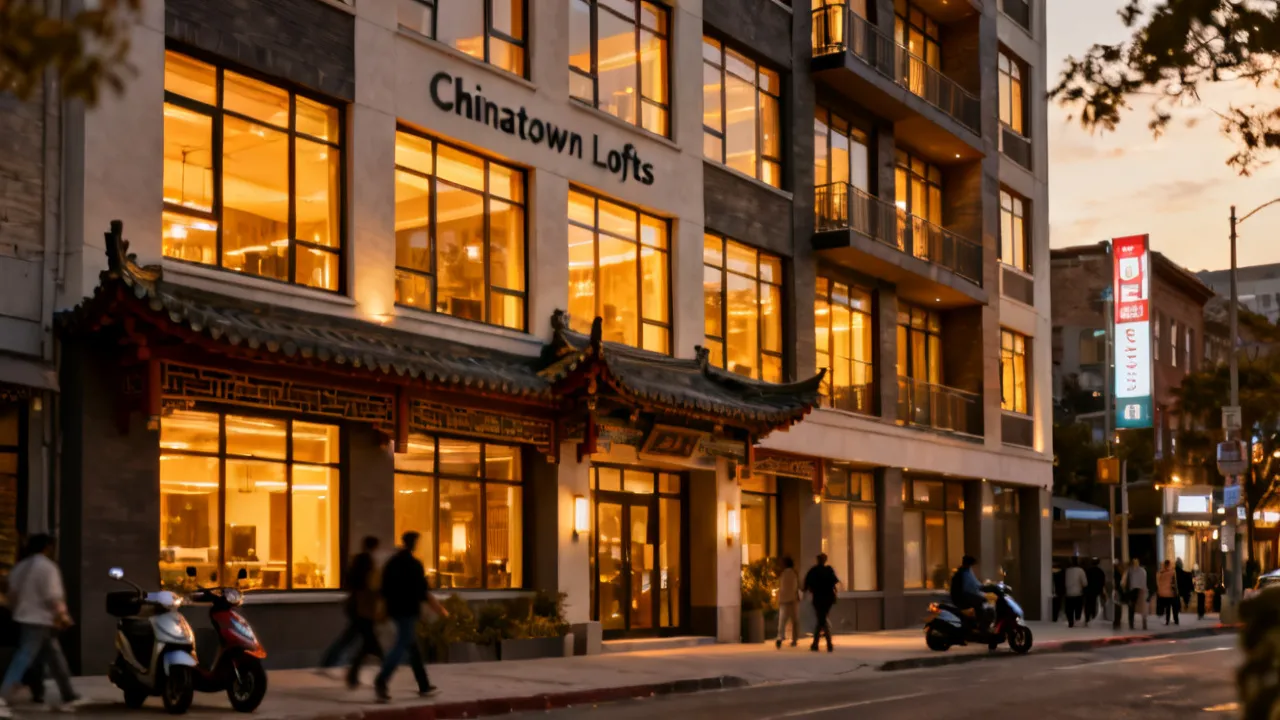
Chinatown Lofts: A Practical Buyer’s Guide Nearby
This guide explains what to evaluate when considering Chinatown Lofts, from location fit and building quality to unit layout and good costs. Objectively, “lofts” typically combine open-plan living, adaptive reuse or modern industrial design, and tighter trade-offs between privacy and light. Chinatown-adjacent neighborhoods also influence noise patterns, transit access, and leasing demand through local retail and cultural activity.
Why Chinatown Lofts Deserve Careful Evaluation
Choosing a residence in Chinatown Lofts is less about chasing a single “top” listing and more about matching your lifestyle, financing approach, and risk tolerance to the building’s real-world trade-offs. Loft-style layouts often prioritize openness and light, while the surrounding neighborhood—frequently lively and walkable—can shape everyday factors such as noise levels, pedestrian density, access to amenities, delivery logistics, and even the pace of street cleaning or late-night foot traffic. This article presents an objective, industry-informed framework for assessing whether Chinatown Lofts are a practical fit and how to evaluate comparable alternatives nearby.
Because “loft” is often marketed visually, many prospective residents focus on ceiling height, exposed elements, or the aesthetic appeal of windows and open shelving. But in practice, loft living succeeds or fails based on performance: sound control, air quality, thermal comfort, storage efficiency, and how well the building’s systems hold up over time. A building can have a beautiful design and still deliver an uncomfortable day-to-day experience if the walls, windows, ventilation approach, or maintenance routines are weak. Conversely, some loft conversions deliver strong day-to-day livability even if the finishes look more modest, because the underlying engineering is solid.
For that reason, evaluating Chinatown Lofts deserves a deliberate method. The goal is not to “stress test” the building unnecessarily, but to reduce the chance that your first months in the unit reveal problems you could have anticipated with basic diligence. This guide is designed for both renters and buyers—anyone who wants to go beyond listing descriptions and make a decision supported by observable evidence, reasonable questions, and structured comparisons.
Key Factors First: Layout, Noise, Access, and Total Cost
From an industry perspective, the very consequential differences between loft buildings are rarely aesthetic alone. They usually appear in how the structure performs and how the area behaves day to day. For Chinatown Lofts, prioritize factors that change your daily life:
- Unit layout and privacy: Open plans can feel airy, but they may reduce acoustic and visual separation. If you work from home, share the space with roommates, care for a child, host guests often, or simply value quiet evenings, check how sound travels between sleeping, living, and kitchen zones. Consider how doors, partitions, and ceiling treatment (not just walls) affect privacy and acoustics.
- Natural light and window exposure: Lofts can be bright, yet orientation matters. A “loft window” facing an alley or busy service lane can change the lighting and privacy equation. Window type (double-pane vs. single-pane), glazing quality, and whether windows open frequently can affect both comfort and noise.
- Mechanical system quality: Efficient HVAC, proper ventilation, reliable hot water, and sensible humidity control are central for good comfort—especially in older or mixed-use buildings. Poor ventilation can turn cooking into a long-lasting odor issue; poor humidity handling can create condensation near windows and mold risk in corners.
- Street-level conditions: Chinatown-adjacent corridors often have dense foot traffic, weekend activity, and late-evening dining. Even well-constructed buildings can transmit external noise through windows and doors, and can also amplify vibrations if there is nearby transit or delivery traffic.
- Total monthly cost: Beyond rent or mortgage payments, account for utilities, parking fees, maintenance charges (if applicable), and any building-required assessments or recurring special charges. A unit that appears affordable on paper can become expensive once utilities, amenity fees, and parking realities are added.
- Commute and lifestyle fit: Proximity to markets and transit may reduce transportation costs, but sometimes it increases other costs (e.g., higher parking prices, more frequent deliveries). Consider the full lifestyle equation.
These categories are “first” because they tend to drive the largest hidden outcomes: comfort, stress, and affordability. You can often learn most of what you need about these categories during a thorough viewing and with a targeted list of questions.
What “Lofts” Typically Mean in Practice
The term loft is frequently used for homes that emphasize open-plan interiors, high ceilings, large windows, and flexible usage. In some cases, adaptive reuse from industrial or commercial structures contributes to the look; in others, newer construction imitates that aesthetic. Either way, the experience hinges on how the developer or conversion team executed key building systems—insulation, air sealing, sound-rated partitions, moisture control, and window glazing—since these determine how “comfortable” the openness truly is.
In a conversion, the building envelope can be a patchwork of older and newer components. The biggest question is not whether the unit looks like a loft, but whether it was engineered to behave like a comfortable modern home. For example, you might see large windows and high ceilings (a loft hallmark), but if the windows are drafty, if the HVAC capacity is undersized, or if insulation is incomplete, the unit can feel cold in winter, overheated in summer, and noisy at night. Conversely, a building can appear “less loft-like” while still delivering excellent comfort if its envelope and ventilation strategies are strong.
When evaluating Chinatown Lofts, treat “loft” as a set of design tendencies rather than a guarantee. Ask for specifics: ceiling height range, flooring type, insulation approach, window glazing, and how ventilation handles cooking odors and humidity. Also pay attention to ceiling penetrations, such as exposed piping, ductwork, or electrical conduits. These details influence both sound transfer and the way air moves through the unit.
Finally, remember that loft layouts often produce unusual acoustics because open space changes how sound reflects. Thin walls, hard flooring, and minimal partitions can increase echo and make voices travel farther than you expect. If you are noise-sensitive, your “loft preference” should be tempered by how sound behaves in that specific floor plan, not by how the space looks in the listing photos.
Neighborhood Reality: How a Chinatown-Adjacent Setting Affects Daily Life
Living near Chinatown areas usually means accessibility and cultural vibrancy. People often value the proximity to markets, specialty eateries, community events, and late-night convenience. But “vibrant” can also translate to higher foot traffic and periodic street noise. For Chinatown Lofts decisions, consider how the neighborhood behaves across a full week, not just during the daytime viewing window.
- Foot traffic peaks: Weekends and holiday periods can concentrate visitors. Check whether your unit faces the main sidewalk or a quieter courtyard/back elevation. If you can, stand where you would place your living room and sleeping area and listen for baseline noise levels.
- Deliveries and service activity: Service alleys and loading zones can create intermittent noise and odors. If the building is near restaurant kitchens or shared trash areas, you may also notice odors or trash handling noise.
- Transit and walkability: If the building is near major stops, you may benefit from convenience—but transit-adjacent noise can be a factor on certain nights. Some noise is predictable and manageable; other noise is sporadic but disruptive.
- Local retail hours: Late hours for restaurants or markets can extend ambient sound beyond typical residential rhythms. Pay attention to how long the “ambient buzz” lasts.
- Seasonal changes: Outdoor seating, festival schedules, and weather-driven crowd patterns can shift noise behavior by season. If you are choosing for long-term residence, attempt to learn whether the building is typically quieter or louder at different times of year.
- Traffic and ride-share patterns: Ride-share pickup/drop-off points can create short bursts of idling, door opening sounds, and occasional shouting.
Local residents often describe these areas using practical terms such as “busy streets on weekends” or “lively evenings,” which are useful—not because they quantify everything, but because they point you toward what to inspect in person. Use that qualitative information to create hypotheses you then test during your viewing and your follow-up questions.
Building Quality Checklist: What to Verify Before You Commit
To assess Chinatown Lofts objectively, use a structured inspection approach aligned with how property professionals evaluate residential buildings. Even if you’re renting, treat this like a diligence step: ask questions, request documentation, and observe conditions. The intent is to reduce uncertainty before you sign, not to discover problems after move-in.
When you evaluate a loft, think in categories: “will it be comfortable,” “will it be quiet,” “will it stay functional,” and “will it be safe.” Most hidden issues become visible in one of these categories if you ask correctly and look carefully.
1) Interior Fit: Layout, storage, and daily usability
Loft living can be wonderful when storage is thoughtfully designed. In open spaces, clutter becomes more obvious and harder to hide. Confirm the following points:
- Bedroom separation: Is the sleeping area tucked behind a partial wall, or is it fully open to the living space? If there is a partial separation, evaluate whether it provides real acoustic damping. Many loft sleeping areas look separated visually but remain open acoustically.
- Closet capacity: Count real hanging space and shelf volume. “There’s a closet” can mean very different things. Check whether the closet is in a convenient location or if it creates friction (for example, a closet that requires walking through the living area every time).
- Storage beyond closets: In lofts, you may need additional storage solutions such as cabinets, built-ins, or under-structure storage. Assess whether you will need to buy shelving or storage furniture. Factor that into overall cost and effort.
- Kitchen functionality: Check counter depth, cabinet storage, and whether the layout supports your cooking style. If the kitchen is open to the living space, you should evaluate whether cooking odors linger and whether the range hood is truly effective.
- Bathroom ventilation: Look for window or mechanical ventilation adequacy to reduce humidity-related issues. A bathroom without adequate ventilation can cause recurring fogging, lingering moisture smell, and mold near grout lines.
- Electrical outlets and lighting: Loft windows and high ceilings sometimes make lighting placement tricky. Confirm that you have enough outlets where you will actually use devices and that the lighting design supports daily tasks (not only photo-friendly ambiance).
- Ceiling height and furniture scale: High ceilings can be great, but they can also affect window treatments, lighting fixtures, and the scale of furniture you can place comfortably. If the space has large windows, confirm you can cover them in a way that offers privacy and noise reduction.
Also consider how your routine interacts with the space. If you work late or early, think about whether you can navigate from bedroom to bathroom without turning on bright living-room lights. The best loft for one person may be the worst for another depending on how they move through the unit.
2) Sound and comfort: windows, floors, and HVAC
Loft designs can highlight sound transmission if systems are not well insulated. You should investigate sound and comfort deliberately:
- Window type and sealing quality: Ask about glazing (for example, double-pane), frame quality, and whether windows are sealed properly. Check if you feel drafts near window corners, especially during colder weather (if possible) or by running your hand along edges.
- Noise observation at multiple times: Observe noise during early evening and late night if possible. Many loft residents discover noise problems only after they have lived there for a while, when external activity peaks.
- HVAC specifications: Confirm HVAC specifications and whether units are individually controlled or centrally managed. Individual control can give you meaningful comfort management. Central systems can be efficient but sometimes produce temperature variability.
- Bathroom fan and kitchen hood effectiveness: Run the fan and hood during the viewing to see if airflow is actually strong. A loud fan that doesn’t remove odors can still be unsatisfactory.
- Hot water reliability: Ask how hot water delivery works and whether there are known issues with pressure or temperature. In multi-unit buildings, hot water performance can vary, especially during peak usage hours.
- Floor construction and impact noise: Evaluate floor construction. Are impacts and vibrations noticeable when someone walks above or nearby? Loft floors often use materials and assemblies that influence both airborne and impact noise. If you can, listen for footsteps and cabinet closures.
- Echo and reflection: Open-plan designs can increase echo. If you clap once lightly in the unit (briefly and respectfully), pay attention to whether the sound “rings.” While it’s not a formal test, your senses can detect obvious reverberation issues.
One practical approach is to create a short “comfort test” during your viewing: check window sealing, run HVAC briefly, operate kitchen and bathroom ventilation, and listen to baseline street noise. Then repeat the same mental checklist at night when neighborhood activity changes.
3) Maintenance and building management: documentation matters
Good comfort depends on whether the building is maintained consistently. If Chinatown Lofts is part of a managed community, request information on maintenance practices and how problems are handled:
- Recent maintenance schedules: Ask about HVAC servicing schedules, filter replacement, and window or envelope inspections.
- Work orders related to leaks, ventilation, or heating/cooling issues: While you might not get detailed personal data, you can ask for summary trends. Persistent categories like “water intrusion” or “condensation complaints” can signal building envelope or ventilation issues.
- General response timelines: How quickly management addresses repairs is often a major determinant of resident satisfaction.
- Budget transparency (for ownership scenarios): If you’re buying, review reserve fund health and maintenance planning where possible.
- Communication quality: Ask how residents receive updates (email, portal, posted notices). A building with decent communication tends to prevent small issues from becoming recurring frustrations.
Industry practice treats management competence as a leading indicator of resident experience. A visually attractive lobby won’t compensate for recurring mechanical problems, delayed repairs, or inconsistent cleaning. In loft buildings, where large windows and open spaces can reveal minor issues (condensation, streaking, uneven heating), maintenance quality becomes even more noticeable.
If you encounter staff members who seem uncertain about basic building questions, that can be a red flag. You do not need them to memorize every detail, but you should be able to get clear answers or documentation about maintenance and compliance.
4) Fire safety and compliance: non-negotiable review points
In multi-unit residential buildings, safety systems must meet local requirements. Verify:
- Smoke and carbon monoxide detector location and functionality (if accessible). CO detectors are especially relevant if the building has gas appliances or a shared mechanical system.
- Stairwell and egress conditions: Are stairwells clear? Are doors functioning properly? Are exit paths free of clutter?
- Documented building updates relevant to fire safety systems: For example, updates to alarms, sprinklers (if applicable), or compartmentalization improvements.
- Elevator safety and emergency procedures: If elevators exist, verify that emergency access procedures are known and that elevators are maintained.
Even when you cannot confirm every technical detail, you can and should ask the managing entity about compliance status and recent inspections. If you are buying, you may have access to additional documents. If renting, you may still request information regarding maintenance of life-safety equipment and any major recent safety work.
Keep in mind that loft buildings can sometimes have unusual layouts and ceiling voids due to original industrial features. In general, compliance and compartmentalization matter. So asking questions about inspections is appropriate, not excessive.
Pricing and Cost Strategy (Without Unreliable Numbers)
You may encounter price information associated with Chinatown Lofts listings online, but real pricing is highly variable based on unit size, floor level, view exposure, lease term (for rentals), and current market conditions. Since this guide avoids unverified claims, treat “typical” figures with caution unless they come from reputable sources such as published market analyses or official data releases.
Instead of relying on a single price range, use a cost strategy that reflects how affordability actually works:
- Normalize comparisons: Compare per-square-foot cost, but also adjust for ceiling height, layout separation, storage utility, and noise exposure. Two units with the same square footage can feel dramatically different due to light and acoustics.
- Compute all-in monthly cost: Rent plus utilities and recurring building charges can materially shift affordability. Include predictable items such as electricity, internet (if bundling differs), gas (if applicable), and any building fees.
- Check lease terms carefully: Renewal options, notice periods, and allowed modifications can affect your total commitment. For renters, consider whether you can add window coverings or additional ventilation solutions if noise or odor is an issue.
- Identify one-time costs: Security deposit terms, move-in fees, elevator reservation costs (if applicable), and parking deposits can impact early cash flow.
- For buyers: consider ongoing ownership costs: If purchasing a unit, maintenance fees, property taxes, insurance, special assessments, and reserve funding matter. Loft buildings sometimes have unique maintenance needs due to envelope features, high windows, or shared rooftop equipment.
Affordability is not merely about the rent or purchase price. It’s about whether the building’s operational costs remain reasonable and whether you will need to spend additional money to make the unit comfortable (for example, window treatments for sound/privacy or dehumidifiers for moisture control).
Supplier and Stakeholder Perspective: Who Typically Influences Loft Quality
When evaluating Chinatown Lofts, it helps to understand the supply chain behind quality. A “supplier” in real estate isn’t always a single company; it’s often a set of contractors and vendors whose work becomes visible in day-to-day durability. Common stakeholder roles include:
- Property developers: Define the design brief and baseline construction approach, including whether sound mitigation and envelope upgrades are treated as budget line items or priorities.
- General contractors: Coordinate execution and schedule, which affects whether installations are done with attention to detail or rushed.
- Building engineers: Shape insulation, ventilation, and mechanical system design. Their choices strongly influence thermal comfort and odor control.
- Property managers: Influence maintenance performance and resident communications. Over time, management practices show whether issues are ignored or resolved.
- Specialty subcontractors: Flooring installers, window contractors, and HVAC technicians can significantly affect comfort and longevity.
- Third-party inspectors and code officials: While not “suppliers,” their involvement can determine whether documentation and compliance are robust.
Ask for transparency where possible: “Which vendor handled HVAC?” or “What window glazing type was installed?” Even partial answers can help you estimate whether the building will age well. If the building uses a high-efficiency or premium window system, you may see improved comfort and reduced noise. If the systems were installed cheaply, the building might require earlier maintenance or could exhibit inconsistent temperatures.
Also pay attention to how quickly contractors were responsive if problems occurred during earlier years. While you might not get full details, you can ask management if there have been repeated issues. Trends matter.
Decision Framework: Rent vs. Buy vs. Wait
Many buyers and renters treat loft selection as a short-term lifestyle decision. Yet the top outcome typically comes from aligning the choice with your medium-term plan. For Chinatown Lofts, consider several practical dimensions:
- Duration of stay: If you may move within a year or two, rental flexibility often matters more than good structural concerns. Still, comfort issues can matter even for short stays, so diligence remains important.
- Financing comfort: For buyers, evaluate interest-rate sensitivity and ensure monthly obligations remain manageable under conservative scenarios. Loft buildings can have condo fees that vary based on maintenance needs.
- Opportunity cost: If you’re choosing among multiple neighborhoods nearby, quantify travel time and convenience impacts, not just the unit price. Being near transit can reduce commute costs and time—factors that often outweigh a small price difference.
- Risk tolerance: Buildings with higher external noise may require compromises (earplugs, bedroom placement, window treatments). Decide in advance which trade-offs you can accept and which you cannot.
- Life changes: Loft living can be sensitive to changes—new job routines, remote work frequency, or changes in household composition. Consider whether your next year might be more static or more unpredictable.
- Renovation flexibility: If you rent, modifications may be restricted. If you buy, you may be able to add sound dampening measures or modify storage—but you’ll still pay for upgrades and the time required.
Waiting can sometimes be wise if you’re unsure about noise exposure or if you cannot visit at night. But waiting too long can also cause you to miss suitable units or lock into a less flexible arrangement. The best framework is to clarify what information you need (noise behavior, ventilation performance, maintenance history) and make a decision once you have enough evidence.
Comparison Table, Requirements, and Step-by-Step Evaluation
Below is a practical supplement to help you compare options consistently. It does not require you to rely on any single listing; it encourages structured verification. Use it as a scorecard and keep notes. When you compare multiple Chinatown Lofts options, consistency is key: evaluate each unit using the same criteria and then decide based on what you personally value most.
| Evaluation Area | What to Compare | Objective Signals to Look For | Conditions/Requirements |
|---|---|---|---|
| Layout | Sleeping privacy, kitchen access, circulation flow | Clear sight lines, practical storage, workable furniture placement | Check both day and night light; confirm dimensions from the floor plan |
| Acoustics | Street-facing vs. courtyard/back exposure | Repeatable noise observation, minimal vibration when doors close | Inspect during weekend evening and a weekday night if possible |
| Ventilation & HVAC | Cooking odor control and thermal stability | Effective airflow, temperature recovery time, reliable hot water | Request system details; test controls during the viewing |
| Building Management | Maintenance responsiveness and transparency | Clear communication, documented repairs, consistent upkeep | Ask for recent maintenance examples relevant to comfort and safety |
| Safety & Compliance | Fire detection and egress readiness | Operational detectors, safe stair/elevator access conditions | Confirm compliance documentation where available; ensure no blocked exits |
| Total Cost | All-in monthly affordability | Utilities estimate quality, realistic charge expectations | Budget for utilities and recurring building charges; compare like-for-like unit size |
Step-by-Step Guide for Evaluating Chinatown Lofts Nearby
- Shortlist by exposure: Choose units with similar size, then sort by street-facing versus quieter exposure. Exposure often predicts noise and light more than unit size alone.
- Verify the floor plan: Confirm the actual separation between living and sleeping areas and where storage is located. If the floor plan shows a “bedroom” but no door, privacy may be limited.
- Schedule two visits: One during daytime for light and one during evening for noise and livability. If you can only visit once, pick the time when noise would be most relevant to your routine (often late evening).
- Test comfort during viewing: Run HVAC controls, check bathroom ventilation, and evaluate condensation risk near windows. Look at corners and near exterior-facing surfaces for any signs of moisture or staining.
- Request building documentation: Ask about maintenance practices and safety-related updates. If renting, ask what documents they can share and whether there are building-level compliance records.
- Compare all-in monthly costs: Include utilities and recurring charges rather than comparing only asking rent or list price. If utility responsibility differs between units (for example, if some include utilities), normalize the comparison.
- Confirm lease or ownership terms: Renewal, repairs responsibilities, and any restrictions on modifications. If you need sound dampening measures, check whether you can install window coverings, acoustic panels, or additional ventilation upgrades.
- Decide with an “uncertainty buffer”: If you’re sensitive to noise or odors, add a buffer for neighborhood variability. A small difference in window exposure can lead to a large perceived difference in comfort.
Conditions and Requirements to Keep in Mind
- Documentation readiness: If you request disclosures, ensure your timeline allows for review before signing. Don’t accept verbal assurances alone.
- Inspection opportunity: Some buildings allow short pre-lease checks; use them to evaluate HVAC behavior and ventilation. Even a five-to-ten-minute operational test can reveal whether systems are functioning properly.
- Time-of-day constraints: Neighborhood conditions vary. If you cannot visit at night, compensate by researching resident reviews and contacting management with specific noise questions (for example, “Does the unit face a service lane, and do residents report weekend noise?”).
- Budget realism: Confirm utilities expectations and any parking/amenity charges that affect monthly affordability. Parking costs can be one of the largest surprise expenses in dense neighborhoods.
- Building rules and restrictions: Lofts may have rules about pets, smoking, trash handling, and balcony/terrace usage. Review them to avoid future frustration.
- Internet and wiring: Some loft conversions have dated wiring or limited ISP options. If remote work depends on stable internet, verify connectivity and whether the unit has suitable wiring access points.
FAQs about Chinatown Lofts
1) Are Chinatown Lofts usually louder than other areas nearby?
They can be. Loft units located near active corridors often face higher foot traffic and intermittent street activity. The key is not the label “Chinatown-adjacent,” but the unit’s exposure—street-facing versus quieter sides—and the building’s window and insulation quality. A courtyard-facing loft can be dramatically quieter than a street-facing one even within the same building, depending on the building’s envelope and window orientation.
2) What should I check first in a loft-style apartment?
Start with layout usability (privacy between areas and storage), then verify comfort systems: HVAC performance, ventilation, and window sealing. Finally, observe noise at different times so you’re not relying on a single daytime impression. If you are choosing among multiple options, you can rank units by comfort system performance and only later refine the selection based on aesthetics.
3) Do lofts have hidden maintenance issues?
Any building can have maintenance challenges, but lofts sometimes highlight them because open layouts and large windows reveal thermal or ventilation weaknesses more readily. The top mitigation is to review maintenance history, ask targeted questions, and confirm building management responsiveness. Another tactic is to look for visible signs: water staining, persistent condensation marks, or recurring odors near windows or ventilation grilles.
4) How do I compare multiple Chinatown Lofts listings objectively?
Compare like-for-like features: total square footage, layout separation, ceiling height range, window exposure, and all-in monthly cost. Don’t compare only the asking price; include utilities and recurring building charges. If you can, compare also the time required to reach essentials (grocery, transit, pharmacy) and whether those routes require walking through the busiest parts of the street at night.
5) Should I prioritize supplier or contractor track records?
Where available, it can help. Quality is influenced by multiple stakeholders—developer, contractor, and specialty vendors—so asking about HVAC/window installation details can provide practical insight. However, focus very on verifiable evidence: maintenance outcomes, safety compliance, and how the building performs today. In other words, the “track record” matters most if it aligns with current resident experiences and documented maintenance patterns.
6) Is it better to choose a higher floor or a quieter side?
Often, quieter-side units reduce street noise, while higher floors can reduce some external disturbances. The very reliable approach is to visit at the relevant times and compare your specific exposure to your comfort needs. Higher floors can still experience noise if sound reflects off nearby structures or if there are nearby ventilation exhausts or service equipment.
7) What objective sources can I rely on for market context?
For neighborhood and pricing context, rely on established research such as government housing reports, credible real-estate industry research publications, and mainstream market analyses from recognized firms. For example, in the U.S., official sources like the U.S. Census Bureau and HUD provide data on housing markets and affordability trends. If you share your city or country, you can also consult local government housing reports and reputable academic or industry studies. Even though this guide focuses on practical evaluation, broader context can help you understand demand pressure and affordability trends affecting the units you’re considering.
Context and Credible Sources (For Market and Housing Understanding)
When assessing demand, pricing movement, or affordability pressure in markets where Chinatown Lofts may be listed, avoid rumors and promotional claims. Use credible references such as:
- U.S. Census Bureau housing and demographic data (where applicable)
- U.S. Department of Housing and Urban Development (HUD) research and market indicators (where applicable)
- Reputable industry research firms that publish methodology and historical series
This guide focuses on practical evaluation rather than speculative forecasts, because individual building performance and unit exposure often matter more than broad market narratives. Still, credible market context can prevent you from making decisions based on inaccurate assumptions about future rent increases, buyer demand, or neighborhood development patterns that could affect your day-to-day experience.
Local Nuance: Living Comfort in a Cultural, Walkable Setting Nearby
One reason people seek Chinatown Lofts (and similar loft living near vibrant districts) is the convenience of day-to-day life: markets, food halls, community businesses, and transit options can reduce time spent “getting around.” At the same time, residents learn to adapt—using curtains or sound-absorbing materials, choosing bedroom placement carefully, and setting expectations for weekend busyness. If you approach the neighborhood as a living system rather than a static backdrop, your selection becomes more resilient.
Local nuance can also influence comfort in subtler ways. For example, if there are frequent street events, you might experience occasional noise spikes even if the area is generally calm on most nights. Or if the building is near a cluster of takeout kitchens, odors might be present at certain times depending on ventilation exhaust placement. These details are not always captured in listings, but they are often observable during evening visits and conversation with residents or management.
In many community settings, you may hear residents describe the area as “lively” or “always something happening.” Treat that as qualitative context, then confirm with in-person observation. One resident might mean “great energy,” while another might mean “too loud to sleep.” Your goal is to identify which interpretation matches your needs.
Practical Tips for Noise Management in Loft Living
Even with careful evaluation, you may still want a plan for managing noise—especially in loft buildings near busy streets. Noise mitigation is not about pretending the building is quiet; it’s about ensuring the building’s baseline noise remains tolerable for your routines.
- Choose bedroom placement intentionally: If the unit has a choice, place the sleeping area farthest from the most active street-facing side.
- Use window treatments strategically: Heavy curtains can reduce some external noise and improve privacy. If you’re renting, confirm you’re allowed to install rods or mounted hardware.
- Consider rugs and soft furnishings: In open lofts, flooring and large reflective surfaces can cause echo. Rugs can improve acoustic comfort.
- White noise as a tool: Many urban residents use white noise machines to reduce sharp spikes in sound. If noise is sporadic (not continuous), white noise can make sleep more consistent.
- Seal drafts: Drafts and small leaks around windows can let more noise in. If you notice gaps, ask management about permissible improvements.
These strategies are especially relevant if you fall in the “risk-tolerant but noise-sensitive” category. You don’t need to eliminate noise entirely, but you should be confident you can manage it without significant disruption.
Ventilation, Humidity, and Odor Control: Why They Matter More Than Many Buyers Think
Lofts often have large windows and open layouts, which can look great—but ventilation and humidity control are where comfort is won or lost. In dense neighborhoods, cooking odors can be influenced by building ventilation patterns. If your kitchen is open to the main living space, odors can circulate longer unless the range hood effectively exhausts air.
When evaluating Chinatown Lofts, consider practical checks:
- Range hood effectiveness: If the hood is ducted outside, odors can be reduced more effectively. If it recirculates air through filters only, odors may linger.
- Bathroom fan strength: Run the fan and feel for airflow. A weak fan can leave humidity trapped, causing mold near corners and grout.
- Condensation observation: Look for condensation near windows or along exterior walls. Even if you can’t test in every weather condition, visible condensation stains or repeated moisture marks can indicate a ventilation or insulation issue.
- HVAC air distribution: Check whether vents blow where you need airflow. Uneven distribution can cause hotspots or cold spots that make the unit uncomfortable.
Odor control and humidity are not cosmetic concerns. They directly influence air quality and long-term maintenance costs. If the unit has a “stale” smell during viewing, treat it as a signal to investigate further rather than assuming it will go away after you move in.
How to Evaluate Management Responsiveness Without Getting Lost in Vague Answers
One of the biggest challenges in property evaluation is that management discussions can become vague: “We handle issues quickly,” “Maintenance is good,” “It’s been fine.” While you may need to accept some limited information, you can still press for specifics that help you evaluate responsiveness.
Try asking questions like:
- “What was the most common maintenance issue in the last quarter, and how quickly was it addressed?”
- “How do you handle HVAC complaints—are there documented service steps?”
- “If there’s a leak or condensation issue, what’s your typical inspection process?”
- “Are there recurring complaints about noise, odors, or ventilation?”
Clear answers, documentation, and willingness to provide practical details are positive signs. Responses that avoid specifics or redirect without providing useful context can be a negative indicator.
How to Compare Units Like a Professional: Scoring and Documentation
Professional evaluation often involves structured scoring, not just feelings at the viewing. You can replicate that approach with a simple system. If you evaluate multiple Chinatown Lofts, you should take consistent notes and assign relative scores for each category you care about most.
Consider creating a one-page scoring sheet with categories such as:
- Layout usability (privacy, storage, furniture placement)
- Noise baseline (day and evening)
- Noise spike risk (weekend activity, service corridors)
- HVAC performance (temperature control, comfort)
- Ventilation and odor control (kitchen hood, bathroom fan)
- Window quality (drafts, sealing, glazing)
- Maintenance responsiveness (management communication)
- Safety and compliance (basic documentation and signals)
- Total all-in monthly cost (utilities, fees, parking)
Document your impressions immediately after each visit. Include time-of-day notes: a unit can feel acceptable during the day and unacceptable at night. Also include notes about external factors: deliveries, street cleaning, or event-related noise. Over time, these notes can reveal patterns you might otherwise forget.
Step-by-Step: A Night-Visit Method That Improves Decision Accuracy
If you want to evaluate noise and livability more accurately, use a deliberate night-visit method rather than doing a quick walk-through. Here’s a practical approach:
- Arrive at least 15–20 minutes early so the neighborhood can “warm up” into its evening pattern.
- Stand outside your intended entrance and listen for baseline noise, including intermittent spikes such as idling cars, loud groups, or delivery activities.
- Enter the unit and listen with windows closed: notice whether the sound changes significantly when windows are closed.
- Listen again when HVAC is running: some HVAC systems create noticeable background noise that can either mask or amplify street sounds.
- Operate ventilation systems briefly to confirm fan behavior and whether any rattling occurs.
- Simulate your routine: turn on lights you would use at night, check bathroom functionality, and consider whether you would wake up when doors close or when footsteps travel.
Even if you can’t do this for every unit, doing it for at least the top contenders can significantly improve your decision accuracy.
Interpreting “It’s an Old Building” in a Smarter Way
People often say “it’s an old building” as a vague catch-all explanation. That phrase can be meaningful or meaningless depending on what upgrades were done. In evaluating Chinatown Lofts, interpret “old building” by asking what has been updated.
For example:
- Windows: were they replaced or retrofitted?
- Insulation and air sealing: were improvements made to reduce drafts and noise transfer?
- Mechanical systems: are HVAC and ventilation modern and maintained?
- Plumbing: are pipes insulated and updated to reduce noise and maintain hot water reliability?
- Fire safety: have inspections and upgrades been conducted as required?
If a building is older but upgraded thoroughly, it may feel more comfortable than a newer building with cheaper installations. Conversely, if “old building” means systems were never modernized, the building may experience recurring comfort and maintenance issues. Your goal is to determine which reality applies.
What to Watch for in Loft Finishes That Hint at Underlying Quality
Finish quality can sometimes correlate with building system quality, though it’s not always a reliable indicator. Still, you can glean signals by observing:
- Flooring installation: Are edges properly sealed? Is there uneven settling?
- Window frames and caulking: Are there gaps or visible cracks indicating draft pathways?
- Door hardware alignment: Doors that don’t close tightly can leak sound and air.
- Ceiling and wall joints: Poor workmanship can indicate rushed installations.
- Vent grilles and duct paths: If ductwork is visibly disconnected or poorly routed, that can impact airflow.
Use these observations as hints that support your deeper questions, not as standalone proof. The most important outcomes come from system performance and maintenance behavior, not only finish aesthetics.
Legal and Contract Considerations (Especially for Rentals)
If you’re renting Chinatown Lofts, your contract shapes your ability to manage problems. Even if you find a unit that seems acceptable, you need to understand your rights and responsibilities. Consider:
- Repair responsibility: What repairs are the building’s responsibility versus yours?
- Noise complaints process: Is there a formal process for addressing noise concerns or ventilation failures?
- Modification restrictions: Are you allowed to install additional shelving, mount curtain rods, or use window inserts?
- Lease renewal and notice periods: If you discover a comfort issue after move-in, notice timelines can affect your ability to exit.
- Move-in inspection expectations: Document the unit condition at move-in to avoid disputes later.
Contract awareness doesn’t remove the need for diligence; it complements it. A unit with good systems still deserves a careful contract review, especially when your ability to respond to issues is constrained.
Buyer Considerations: How Ownership Changes Your Evaluation Priorities
If you’re buying Chinatown Lofts, your evaluation priorities shift slightly. You still need to evaluate comfort, noise, and ventilation, but you also need to consider longer-term ownership factors:
- Condo or HOA fees: Lofts often have unique shared amenities or maintenance burdens. Fees can change over time based on building needs.
- Reserve funds and special assessments: Ensure reserves appear sufficient and that there aren’t looming major repairs that could create special assessments soon.
- Building envelope and window maintenance costs: If the building needs window or envelope work, costs can be substantial.
- Documentation access: You may have access to maintenance records, meeting minutes, and compliance updates. Reviewing these can be highly informative.
- Renovation planning: If you want to improve sound dampening or airflow, consider permitting and condo rules.
Even if you plan to keep the unit long-term, you should still evaluate noise carefully—because it’s not something ownership automatically fixes. You can do improvements, but you can’t change the neighborhood’s essential character.
Choosing the Right “Trade-Off” Instead of Searching for Perfect
A useful mindset when evaluating Chinatown Lofts is to choose the right trade-off, not chase perfection. In a dense, culturally vibrant neighborhood, you often trade quiet for convenience, or you trade openness for privacy, or you trade a premium view for higher noise exposure.
Ask yourself:
- What is non-negotiable: quiet sleep, ventilation quality, storage, or cost?
- Where can you compromise: decorative finishes, minor noise spikes, or aesthetic features?
- How does the unit match your daily habits: cooking frequency, remote work needs, social schedule, and sleep sensitivity?
If you can articulate your non-negotiables, your evaluation becomes clearer. You stop comparing irrelevant features and focus on what truly drives your satisfaction.
Final Takeaway: A Balanced Choice Beats a Guess
For readers considering Chinatown Lofts nearby, the strongest decision is the one supported by verification: evaluate layout privacy and storage, observe noise and light at multiple times, confirm ventilation and HVAC performance, and compare all-in monthly costs rather than relying on a single figure. When you combine structured due diligence with realistic expectations for a culturally active neighborhood, you significantly improve your odds of finding a loft that feels good not just on move-in day, but throughout the year.
Ultimately, a “good” loft is not only about style. It’s about whether the building’s systems and the neighborhood’s rhythms align with how you live. If you take the time to inspect, question, and compare consistently, you reduce the likelihood of expensive surprises and increase the odds that your next home supports your comfort, routine, and long-term goals.